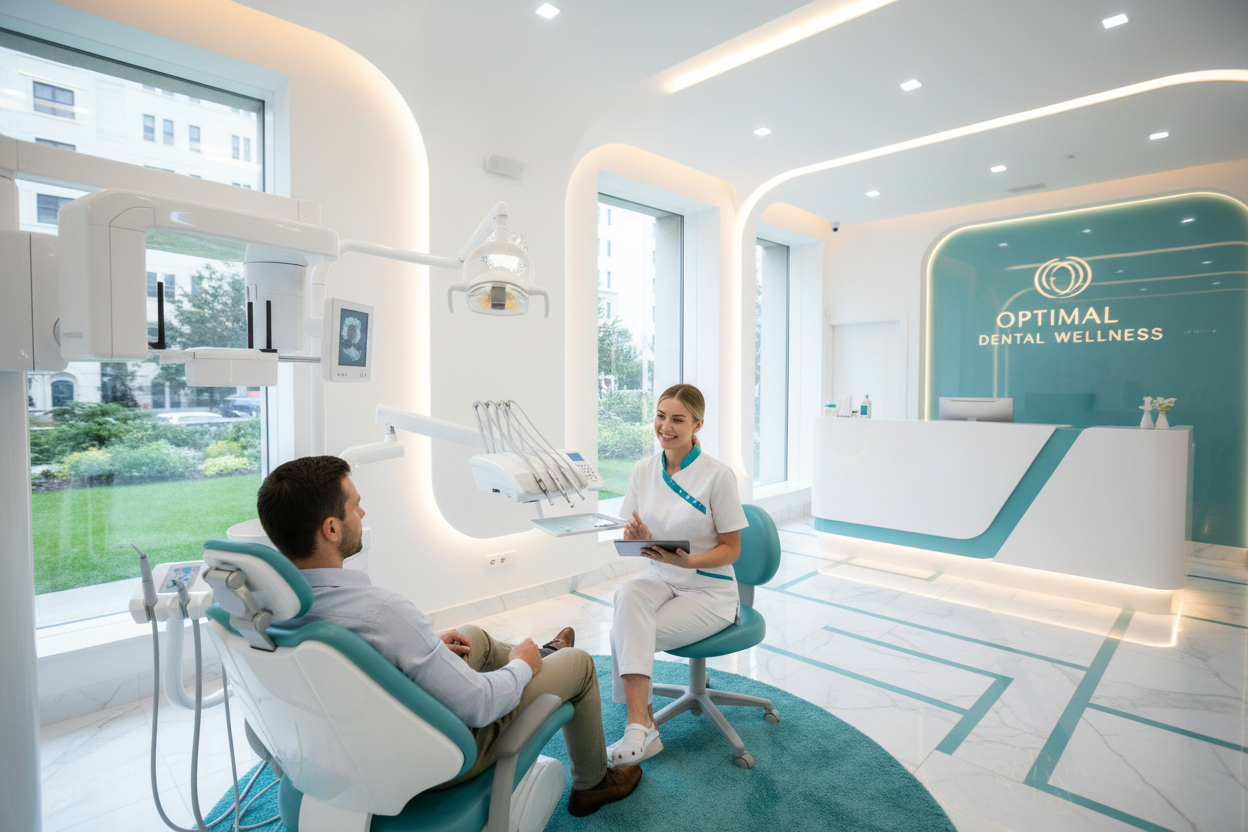
Digital Dentistry and Guided Dental Implant Planning
Digital dentistry can support communication and planning for dental implants abroad. Learn what scans, models and guided planning may mean for patients.

Digital tools used in dental implant planning is best approached as a careful information and consultation process, not as a quick purchase. This article explains the planning points that people commonly need to consider when researching dental care abroad. Aurevon Health is an international medical tourism intermediary, not a healthcare provider. We connect people with independent licensed providers and do not diagnose, recommend treatment or assess clinical suitability.
Digital tools used in dental implant planning
Provider checks deserve the same attention as financial checks. Look for evidence of current professional licensing, relevant training, facility standards and clear communication. Accreditation can be useful when its issuing body and scope are clear, but an accreditation logo should not replace your own questions. Ask who will provide the clinical care, where treatment will take place, how records are handled and what happens if the proposed plan changes after an examination. European travel can also involve rights and responsibilities that vary according to where you live and where treatment takes place. Patients travelling from EU countries for treatment in another EU member state may have rights under EU Directive 2011/24/EU, including access to information and, in some cases, reimbursement rules. Read official guidance for your own circumstances and do not treat a general article as legal advice.
Travel planning is part of the patient experience, even though it is not a clinical decision. Consider appointment dates, flights, accommodation, time away from work and the possibility that a clinician may need to change the schedule after an examination. Avoid building an inflexible itinerary around an assumption that every planned stage will happen on a particular day. Your treating provider should explain clinical timing and any travel considerations directly. If you are considering France, the practical questions remain the same while the travel context may be different. France offers major cities, established transport links and a broad healthcare environment, but a destination name alone does not verify a particular provider. Check the exact facility, the responsible professionals, the proposed services and the total estimated cost before making arrangements.
Communication should be clear before any commitment is made. Ask how you will speak with the provider, which documents are needed, whether an interpreter is available and how questions are answered outside an appointment. A responsible intermediary can help people find general information and connect with independent providers, but it does not replace a dentist, does not diagnose conditions and cannot decide which treatment is suitable. Good preparation does not mean trying to make a clinical decision alone. It means arriving at a professional consultation with accurate information, realistic questions and enough time to consider the answer. Your dentist should be able to explain why a particular option has been discussed, what alternatives exist and what uncertainties remain. You are entitled to pause if you do not understand the proposal.
Understanding the clinical conversation
Communication should be clear before any commitment is made. Ask how you will speak with the provider, which documents are needed, whether an interpreter is available and how questions are answered outside an appointment. A responsible intermediary can help people find general information and connect with independent providers, but it does not replace a dentist, does not diagnose conditions and cannot decide which treatment is suitable. If you are considering France, the practical questions remain the same while the travel context may be different. France offers major cities, established transport links and a broad healthcare environment, but a destination name alone does not verify a particular provider. Check the exact facility, the responsible professionals, the proposed services and the total estimated cost before making arrangements.
It is sensible to prepare a written list of questions. Include the proposed treatment stages, alternatives discussed by the clinician, the names of the professionals involved, the facility location, the itemised estimate and the arrangements for future reviews. Keep copies of the information you receive. If an answer is unclear, ask for clarification before paying a deposit or booking travel. Good preparation does not mean trying to make a clinical decision alone. It means arriving at a professional consultation with accurate information, realistic questions and enough time to consider the answer. Your dentist should be able to explain why a particular option has been discussed, what alternatives exist and what uncertainties remain. You are entitled to pause if you do not understand the proposal.
People also need to think about continuity of care. Ask the provider what information you will receive at the end of treatment and what arrangements exist for planned reviews. Ask what you should do if you have a concern after returning home. These are questions for the treating provider, and the answer may depend on the clinical plan. An intermediary cannot promise ongoing clinical monitoring or guarantee a particular response. For dental implants specifically, ask the clinician to explain the proposed stages in language you understand. The discussion may involve an examination, imaging, planning, placement of an implant component and a later restoration, but the exact pathway varies. Do not assume that a general description applies to you. The clinician should explain options, uncertainties and alternatives after reviewing your circumstances.
Costs, quotations and realistic comparisons
People also need to think about continuity of care. Ask the provider what information you will receive at the end of treatment and what arrangements exist for planned reviews. Ask what you should do if you have a concern after returning home. These are questions for the treating provider, and the answer may depend on the clinical plan. An intermediary cannot promise ongoing clinical monitoring or guarantee a particular response. Good preparation does not mean trying to make a clinical decision alone. It means arriving at a professional consultation with accurate information, realistic questions and enough time to consider the answer. Your dentist should be able to explain why a particular option has been discussed, what alternatives exist and what uncertainties remain. You are entitled to pause if you do not understand the proposal.
General dental information should be read alongside advice from an appropriately qualified professional. Online articles cannot examine your mouth, review your complete history or account for factors that might affect a treatment plan. The safest use of an article is as a preparation tool. It can help you understand terminology, identify useful questions and recognise when a promise sounds too certain. For dental implants specifically, ask the clinician to explain the proposed stages in language you understand. The discussion may involve an examination, imaging, planning, placement of an implant component and a later restoration, but the exact pathway varies. Do not assume that a general description applies to you. The clinician should explain options, uncertainties and alternatives after reviewing your circumstances.
When comparing providers in different countries, look beyond photographs and testimonials. Consider whether the written information is specific, whether fees are explained in euros, whether the clinic identifies responsible professionals and whether the answers remain consistent across conversations. A calm, transparent process is usually more useful than pressure to decide quickly. Take time to compare information and retain control of the decision. It can be helpful to distinguish a treatment estimate from a promise. An estimate is based on the information available at that point and may change if an examination identifies additional needs. A promise of a fixed outcome, a risk free procedure or a guaranteed result is not a substitute for proper clinical discussion. Ask how changes are communicated and whether you must approve additional work.
Provider credentials and accreditation
When comparing providers in different countries, look beyond photographs and testimonials. Consider whether the written information is specific, whether fees are explained in euros, whether the clinic identifies responsible professionals and whether the answers remain consistent across conversations. A calm, transparent process is usually more useful than pressure to decide quickly. Take time to compare information and retain control of the decision. For dental implants specifically, ask the clinician to explain the proposed stages in language you understand. The discussion may involve an examination, imaging, planning, placement of an implant component and a later restoration, but the exact pathway varies. Do not assume that a general description applies to you. The clinician should explain options, uncertainties and alternatives after reviewing your circumstances.
Dental treatment abroad is a personal decision that deserves more than a headline price. People usually need to understand the clinical conversation, the provider, the likely stages of care, the travel arrangements and the responsibilities that remain with them after returning home. A useful first step is to separate general information from an individual clinical decision. Only a qualified dental professional who has assessed a patient can discuss suitability, diagnosis or treatment planning for that individual. It can be helpful to distinguish a treatment estimate from a promise. An estimate is based on the information available at that point and may change if an examination identifies additional needs. A promise of a fixed outcome, a risk free procedure or a guaranteed result is not a substitute for proper clinical discussion. Ask how changes are communicated and whether you must approve additional work.
Costs can be an important part of planning, but a meaningful comparison must include the complete pathway rather than one advertised figure. Depending on the provider and the case, a quotation may relate to consultations, imaging, implant components, laboratory work, temporary restorations, final restorations or review appointments. Ask what is included, what may be charged separately and which currency is used. Costs may be lower than equivalent private rates in some European markets, but no price should be treated as a guarantee of value or outcome. European travel can also involve rights and responsibilities that vary according to where you live and where treatment takes place. Patients travelling from EU countries for treatment in another EU member state may have rights under EU Directive 2011/24/EU, including access to information and, in some cases, reimbursement rules. Read official guidance for your own circumstances and do not treat a general article as legal advice.
Travel, communication and continuity
Costs can be an important part of planning, but a meaningful comparison must include the complete pathway rather than one advertised figure. Depending on the provider and the case, a quotation may relate to consultations, imaging, implant components, laboratory work, temporary restorations, final restorations or review appointments. Ask what is included, what may be charged separately and which currency is used. Costs may be lower than equivalent private rates in some European markets, but no price should be treated as a guarantee of value or outcome. It can be helpful to distinguish a treatment estimate from a promise. An estimate is based on the information available at that point and may change if an examination identifies additional needs. A promise of a fixed outcome, a risk free procedure or a guaranteed result is not a substitute for proper clinical discussion. Ask how changes are communicated and whether you must approve additional work.
Provider checks deserve the same attention as financial checks. Look for evidence of current professional licensing, relevant training, facility standards and clear communication. Accreditation can be useful when its issuing body and scope are clear, but an accreditation logo should not replace your own questions. Ask who will provide the clinical care, where treatment will take place, how records are handled and what happens if the proposed plan changes after an examination. European travel can also involve rights and responsibilities that vary according to where you live and where treatment takes place. Patients travelling from EU countries for treatment in another EU member state may have rights under EU Directive 2011/24/EU, including access to information and, in some cases, reimbursement rules. Read official guidance for your own circumstances and do not treat a general article as legal advice.
Travel planning is part of the patient experience, even though it is not a clinical decision. Consider appointment dates, flights, accommodation, time away from work and the possibility that a clinician may need to change the schedule after an examination. Avoid building an inflexible itinerary around an assumption that every planned stage will happen on a particular day. Your treating provider should explain clinical timing and any travel considerations directly. If you are considering France, the practical questions remain the same while the travel context may be different. France offers major cities, established transport links and a broad healthcare environment, but a destination name alone does not verify a particular provider. Check the exact facility, the responsible professionals, the proposed services and the total estimated cost before making arrangements.
A practical preparation checklist
- Write down your questions and keep copies of quotations.
- Check the identity and licensing of the treating professionals.
- Ask what is included in the estimate and what could change.
- Allow flexibility in travel plans and avoid assuming a guaranteed timetable.
- Discuss personal clinical questions directly with a qualified dentist.
Frequently Asked Questions
How much do dental implants abroad cost?
Dental implant costs abroad vary according to the number of implants, the restoration, imaging, laboratory work, the provider and the country. Ask for an itemised estimate in euros and confirm what is included. Costs may be lower than equivalent private rates elsewhere, but price alone does not establish suitability, quality or outcome.
Are dental implants abroad safe?
Safety depends on the individual clinical situation, the licensed professionals, the facility, the planning and the follow up arrangements. No general article can assess safety for one person. Ask about licensing, accreditation, infection prevention, responsible clinicians, emergency arrangements and communication before deciding. Discuss personal risks directly with a qualified dentist.
How long does dental implant treatment abroad take?
The overall pathway varies and may involve more than one appointment or journey. Timing depends on the clinical plan, healing and the restoration required. A provider should explain the expected stages and uncertainties after an assessment. Do not book non refundable travel around a guaranteed timetable, because clinical plans can change.
Can I fly home after dental implant treatment?
Travel advice must come from the treating dental professional because it depends on the procedure and your circumstances. Ask before booking flights, and ask what information you will receive when leaving the clinic. A general website cannot confirm when travel is appropriate or provide personalised post treatment advice.
How do I choose a dental implant clinic abroad?
Begin with current professional licensing, relevant qualifications, facility information, clear communication and an itemised estimate. Ask who provides the treatment, which accreditation body applies and what happens if the plan changes. Compare answers rather than relying on photographs or a low headline price. Take time before paying a deposit.
Patients travelling from EU countries for medical treatment in other EU member states have rights under EU Directive 2011/24/EU, including the right to information about treatment options and, in some cases, the right to seek reimbursement from their home country health system. Full details are available from official sources and the relevant national authority.
The information provided in this article is for general informational purposes only and does not constitute medical advice. Aurevon Health is an international medical tourism intermediary and is not a healthcare provider. We do not provide medical advice, diagnose conditions, recommend treatments, or guarantee any outcomes. All clinical decisions are made exclusively by the licensed healthcare professionals at our partner facilities. Always consult a qualified medical professional before making any decisions about your healthcare. Individual results vary and cannot be guaranteed.